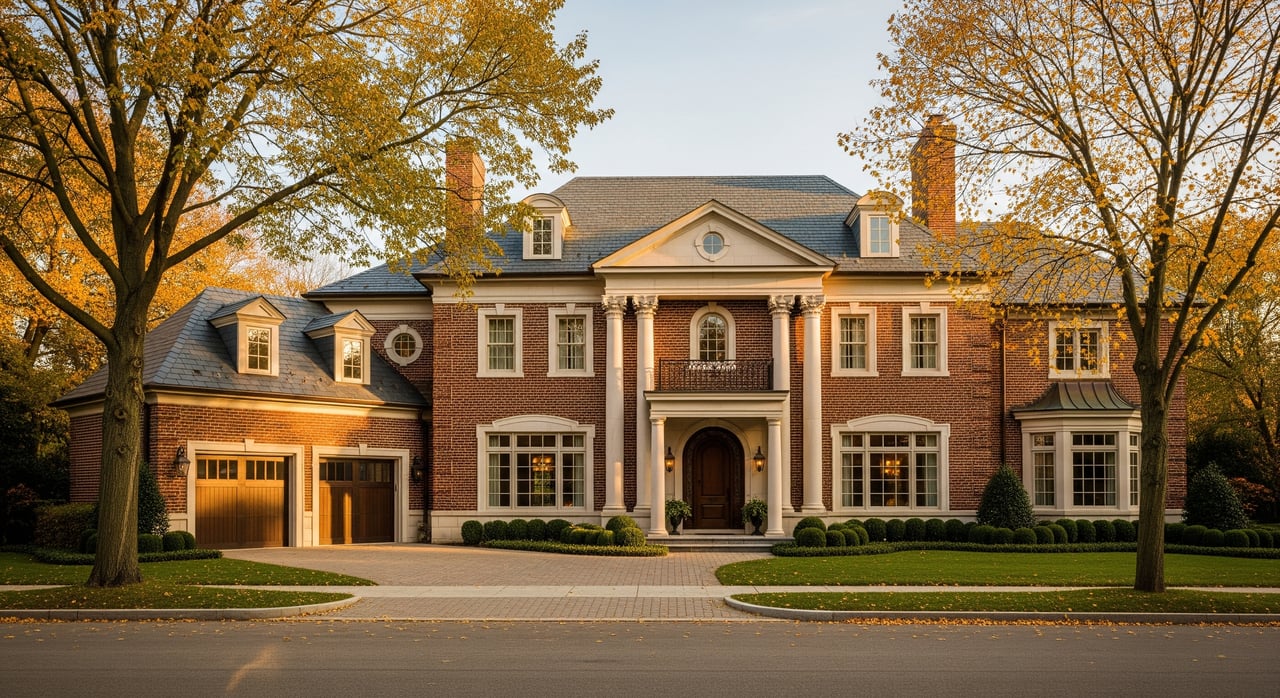
Did your online home estimate make you do a double take? If you own in Bloomfield Village, you are not alone. Automated estimates can swing high or low because they miss the details that truly drive value on your block. You want a price you can stand behind, not a guess.
In this guide, you will learn how online estimates work, what a neighborhood-specific Comparative Market Analysis (CMA) includes, and which Bloomfield Village factors can move your price. You will also get a simple checklist to help you and your agent produce a stronger CMA. Let’s dive in.
Online estimates explained
Automated valuation models use public records, MLS data, tax assessments, and algorithms to produce a quick home value. Services like Zillow, Redfin, and Realtor.com are fast and free, and they offer a ballpark number or a range with a confidence score.
Strengths you can use
- Quick orientation when you are early in your thinking.
- Helpful for broad market trends across a metro area.
- Often provide a confidence metric so you know if the model is guessing or more certain.
Why AVMs miss Bloomfield Village nuances
- Limited interior data. Algorithms rarely know your current condition, finishes, or recent renovations.
- Stale or incomplete records. New additions, a finished basement, or a replaced roof may not be in tax or MLS feeds yet.
- Micro-market blind spots. Models can blend Bloomfield Village with nearby areas that differ in school assignment, lot sizes, and home character.
- Timing lag. In fast-moving conditions, estimates can trail real buyer behavior.
- Off-market activity. Private or pocket sales at higher price tiers are common and often invisible to models.
The takeaway: online estimates are a helpful starting point, but they are not a pricing plan for a Bloomfield Village listing.
What a CMA delivers
A Comparative Market Analysis is a locally informed valuation prepared by an agent. It relies on carefully chosen comparable sales, measured adjustments, and a strategy recommendation tailored to your goals.
How a CMA differs from an AVM
- Human judgment. Your agent evaluates interior and exterior condition, upgrades, and functional layout.
- True comparables. Comps are selected from your micro-neighborhood with similar lot orientation, school assignment, and condition.
- Local adjustments. Dollar or percentage adjustments are drawn from paired-sales analysis, not generic multipliers.
- Strategy overlay. You get pricing options aligned with current inventory and demand.
Steps in a Bloomfield Village CMA
- Confirm your property facts. Verify living area above grade and finished basement, beds and baths, lot size and shape, year built, upgrades, legal description, and any easements or HOA details.
- Define comparable criteria. Focus on single-family homes within about 0.25 to 1 mile, closing in the past 3 to 6 months, with priority on arm’s-length sales. Include pending and active listings to gauge momentum.
- Select 3 to 6 best comps. Favor those needing the fewest adjustments and sharing micro-market traits like street type, lot orientation, and parcel boundaries.
- Calculate raw metrics. Review price per finished square foot, price per lot acre, and price per bedroom or bath.
- Make adjustments. Apply dollar or percentage adjustments for differences in size, beds, baths, finished basement, garage, lot, condition, and age. Explain any subjective calls clearly.
- Reconcile to a range. Weigh each comp, current days on market, and list-to-sale ratios to recommend a list price range and pricing strategy.
- Document rationale. Present the comp set, adjustment summary, and the market conditions that support the recommendation.
Appraisal vs. CMA
An appraisal is prepared by a licensed appraiser for a lender and follows USPAP standards. It uses comps and an inspection, and it is often more conservative. A CMA is a marketing and pricing tool for you and your agent to position the listing and set expectations.
Bloomfield Village factors that move value
School assignment
Confirm the exact school district boundary for your parcel. Assignment can influence buyer demand and pricing expectations, so your CMA should verify it directly.
Lot size, shape, and privacy
Larger, private lots with mature trees are valued by many Oakland County buyers. Irregular shapes, limited backyard utility, or proximity to high-traffic roads can reduce value.
Home size and functional layout
Open-plan kitchens and balanced bedroom-to-bath counts matter. A 4-bedroom with two full baths can perform differently than a 4-bedroom with 1.5 baths, even at similar square footage.
Basement finish quality
In Michigan, a finished basement adds meaningful utility but is valued differently from above-grade space. Ceiling height, egress, and mechanicals affect the adjustment.
Systems and capital items
Recent roof, furnace, A/C, water heater, windows, and sewer or septic updates reduce buyer risk and can support stronger pricing.
Renovation quality and style
High-end kitchen and bath remodels often carry a measurable premium in Bloomfield-area markets. Mid-range updates may return less than you expect. Provide receipts and contractor info.
Historic or custom character
Desirable period features or custom architecture can earn a premium. Dated or unusual layouts can lead to larger adjustments.
Access and commute
Proximity to major routes like Woodward Avenue and I-75 affects buyer pools and demand. Your CMA should reflect how commute convenience compares to nearby options.
Local amenities and rules
Nearby parks, country clubs, and shopping centers shape buyer expectations. If applicable, HOA fees and restrictions also matter.
Side-by-side: estimate vs. CMA
| What you get | Online estimate | Bloomfield Village CMA |
|---|---|---|
| Data source | Public records, MLS feeds, tax data | MLS verified comps, assessor records, seller-provided details |
| Interior condition | Rarely known | Confirmed through inspection or interview |
| Micro-market precision | Broad, blended areas | Same block or micro-neighborhood focus |
| Adjustments | Generic, model-driven | Paired-sales, transparent, locally derived |
| Strategy | Single number or range | Pricing scenarios tied to inventory and demand |
| Confidence | Metro-level error stats | Confidence discussed for your property and comps |
How to read the difference
- Start with both numbers. Look at the AVM’s range and confidence level, then review the CMA’s comps and adjustment summary.
- Tie gaps to specifics. Identify upgrades, lot features, basement finish, or timing that the AVM did not capture.
- Prioritize the comps that feel like your home. The best comparables are the ones requiring the fewest subjective adjustments.
Your role in a stronger CMA
Bring organized details so your agent can substantiate value:
- Written list of upgrades with dates, receipts, and contractors
- Permit records or numbers for additions and major work
- Before-and-after photos of renovations
- Survey, plot plan, and any HOA documents
- Notes on nearby private sales or unique neighborhood activity
Pricing strategy and appraisal readiness
Your strategy depends on goals and market tempo:
- Market-price launch. Position to meet buyer expectations for a strong first two weeks and maximize offers.
- Aggressive pricing. Test the top of the range if inventory is tight and demand is strong, with a plan to adjust quickly if traffic is soft.
- Conservative approach. Price for a quicker sale if timing is critical or if you want to limit appraisal risk.
If your buyer uses a mortgage, the contract price must align with recent closed comps to satisfy the lender’s appraisal. Strong, nearby comps and a well-documented CMA reduce risk. If your buyer is cash, appraisal may be optional, but a defensible CMA still supports negotiations.
Timeline for a neighborhood CMA
- Day 0: You provide property facts, upgrade receipts, and photos. Agent pulls parcel records and preliminary MLS comparables.
- Day 1–2: Agent inspects the property or conducts a virtual walkthrough, refines comps, runs paired-sales adjustments, and checks assessor and permit records.
- Day 3: Agent delivers a CMA summary with comps, an adjustment table, a recommended list price range, a marketing plan, and estimated selling costs and timeline.
Important notes and disclosures
- AVM figures are estimates. CMAs are informed opinions for marketing and pricing, not appraisals.
- Michigan sellers should follow state and local rules for property disclosures, permits, lead paint for pre-1978 homes, and septic or well information if applicable. Consult a licensed agent or attorney for specifics.
- In custom or luxury pockets, small sample sizes can widen the value range. Your agent should be clear about confidence level and rationale.
Ready to list with confidence?
If you want a price you can defend in Bloomfield Village, request a neighborhood-specific CMA that reflects your home’s upgrades, lot, and layout. Share your receipts, permits, and photos, and you will receive a clear range and strategy within three business days. Schedule a conversation with Robert Prior to get started.
FAQs
Why is my Zestimate different from a CMA in Bloomfield Village?
- AVMs use public data and algorithms that miss interior condition and micro-neighborhood factors, while a CMA uses nearby closed sales chosen for similarity and applies local adjustments for renovations and lot features.
Which should I trust for listing price in Bloomfield Village?
- Use the AVM for a ballpark and the CMA for a defensible listing range and strategy, since it reflects current comps, condition, and buyer demand.
How many comparable sales should a Bloomfield Village CMA include?
- Aim for 3 to 6 strong closed comparables plus 1 to 3 pending or active listings to gauge momentum, favoring the comps needing the fewest adjustments.
How recent should comparable sales be for Bloomfield Village?
- Prefer sales from the last 3 to 6 months; if inventory is thin, extend the window and adjust for market movement.
Will a lender’s appraisal match my CMA price in Bloomfield Village?
- Appraisals often align with market comps but can be more conservative; when your CMA is supported by solid nearby closed sales, appraisal risk is lower.
How can I help my agent produce a stronger Bloomfield Village CMA?
- Provide upgrade lists and receipts, permits, before-and-after photos, surveys, HOA documents if any, and any knowledge of nearby private sales.